Plan a bulk custom tote bag order. Compare fabrics, gussets and logo methods, set handle dimensions, and approve samples before production. Start with what people will carry, then use the same sample to assess fit, comfort, artwork and packing. This guide helps retail buyers, merchandise teams and event organisers turn those decisions into a brief that suppliers can quote and produce.
Choose a tote around what people will carry
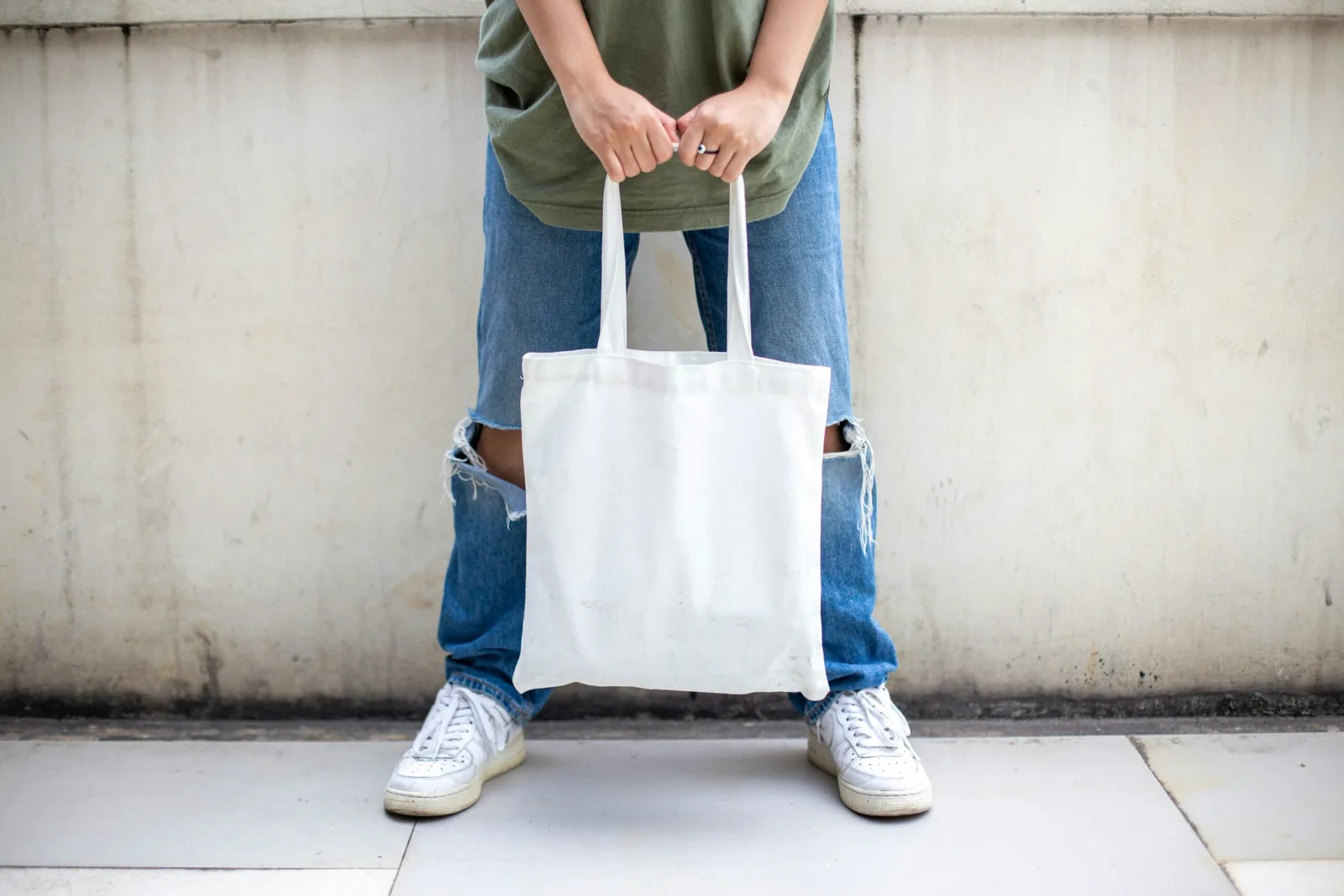
A custom tote bag should make sense with the objects a customer puts inside it. Start the brief with an ordinary load: a folded sweatshirt and a water bottle for a merchandise shop, a notebook and programme for a conference, or a few boxed products for a retailer. Put those items in a prototype and pick it up. How the base settles and where the handle rests tell you more about the bag than its flat dimensions alone. A bag that photographs neatly while empty may become awkward when a single heavy object pulls the bottom out of shape.
A flat tote has a simple silhouette and can be easy to fold for distribution. It suits items that can lie together without much depth. A bottom gusset adds room where products need a wider base, while side and bottom gussets can create a more box-like shape. The extra volume is only useful if the opening accommodates the load. Try inserting the largest item in the direction a customer would naturally use and note whether they have to turn it sideways or stretch the opening. If the bag is intended to carry gift boxes upright, try lifting it and setting it down with a realistic load.
Think about the customer’s journey after receiving the tote. Someone collecting a bag at a trade fair may carry it for several hours alongside a coat or another bag. A bookstore customer may hold the tote by hand on the way home. A shop that sells the tote itself may need a construction that looks good folded on a shelf and feels comfortable with repeat use. Those scenarios put different demands on handle drop, width, fabric weight and the placement of internal seams. Capture the main use case in a sentence on the order brief so everyone evaluating the sample is solving the same problem.
Look at the Jalal Hats organic tote bag product page when preparing your reference images. Select views that show both the silhouette and the details you want to discuss. One photograph may illustrate the base shape while another shows the style of handle attachment. Label the individual features you want from each image. This avoids asking the sample maker to guess whether a reference is about construction, fabric, artwork or colour.
| Construction | Typical use | Specify before quoting | Verify on the sample |
|---|---|---|---|
| Flat tote | Documents and flat merchandise | Finished opening and body dimensions | Easy insertion and comfortable carry |
| Bottom-gusset tote | Books, apparel and boxed products | Opened base depth and seam position | Base stability with a realistic load |
| Side and bottom gussets | Larger gift kits or retail bundles | Opening, base dimensions and gusset layout | Capacity and logo appearance when filled |
| Pocket or lined tote | Private-label and everyday carry ranges | Pocket dimensions, lining and attachment | Pocket access and comfortable inside finish |

Specify fabric and verify material claims
Ask for a physical swatch of the proposed fabric. The hand, colour and surface can differ even among fabrics described as canvas. Weight alone does not describe a woven fabric. Yarn, weave, finishing and washing all change how it behaves. Compare a small group of swatches side by side and fold each where the handle would meet the bag body. Check whether the layers stack comfortably and whether the fabric springs back, creases or collapses. A supplier can then recommend a construction based on an agreed sample of material.
Request the composition, weave, target fabric weight and finish in writing. State whether the quoted weight refers to the material before or after finishing if the difference matters to your design. Use the same unit across quotations, such as grams per square metre. Compare the finished bag weight separately. A tote with a pocket, wide handles and a folded top edge can weigh more than a simpler tote made from the same body fabric. Finished weight matters when you are budgeting for a large shipment or preparing an ecommerce parcel.
Evaluate natural, dyed and printed fabric as different development paths. An undyed-looking fabric can contain visible flecks or variations that affect how a small logo reads. A dyed fabric may look different under store lighting than it does near a window. An all-over print adds decisions about how motifs meet at seams and how the inside appears at the opening. Approve a visible shade range or physical print reference if the collection includes multiple lots. State how the supplier should label lots so the receiving team can trace an unexpected difference.
If the product will carry an organic fibre claim, agree on the exact wording and evidence required before ordering labels or publishing a product description. Ask which stage or product the documentation covers, whether it applies to the material and order under discussion, and whether any logo use requires authorisation. Confirm the status of contrast handles, sewing thread, lining or other components if your intended claim could be read as describing the complete bag. Keep the approved wording and relevant evidence with your purchase records so the product page and swing tag can be checked against the same reference.
For a colour-sensitive collection, request enough fabric to test the artwork and construction together. A logo that reads well on a clean swatch may lose definition when placed over a textured seam or a folded section. If a bag is expected to be washed, agree how the supplier will evaluate appearance and dimensional change under the intended care instructions. Review the shell, print, label and handles after the agreed check. Record the results alongside the sample version instead of relying on memory during the next buying season.
Define dimensions, gussets and handle drop
Use finished measurements in the tech pack and show the points on a simple front and side drawing. Width at the opening and width at the base are two different measurements on a tapered shape. Height may be taken with the body lying flat or standing open, depending on how the gusset is designed. The same nominal dimension can produce different capacity when folds consume part of the opening. Agree on a common measuring position and show which seam or edge is the starting point.
Give gusset depth its own line. On a bottom-gusset tote, confirm whether the dimension refers to the opened base or the folded section measured flat. If there are side gussets, mark where they begin and end, and check whether a closure narrows the opening. Put your largest product into the sample and examine what happens at the corners. Sharp carton edges or a tight fit can concentrate force at a seam. A slight increase in opening width may solve the packing problem more directly than increasing the entire bag.
Handle drop is the distance from the top of the bag to the inside top of the handle when extended. If it matters for your order, agree on how it is measured and how much tension is used. Handle length, width and spacing affect comfort as well as drop. Try the bag over a light shirt and over the type of outerwear your customers are likely to wear. For a short carry handle, check whether the top of the bag brushes the ground for shorter users carrying a typical load. For a long handle, see whether the bag slips off the shoulder when the wearer moves.
Check how the handle is attached. A strap extending down the body can distribute force differently and creates a visible line through the front panel. A shorter attachment keeps the artwork area clearer and places more emphasis on the construction at the top edge. Specify the intended stitch pattern, visible strap length and position on the drawing. Review how the seam allowance, facing and handle layers meet inside the bag. If the order requires a load claim, agree on the appropriate test and pass criteria with the supplier or laboratory before making the claim.
Choose tolerances that correspond to the product’s purpose. If the bag needs to hold a rigid boxed item, opening and base dimensions may deserve tighter control than a decorative pocket position. Ask what can be maintained with the specified fabric and construction. In production, have the inspector record actual measurements from representative pieces instead of only recording pass or fail. That gives you a clearer basis for deciding whether a variation affects use and whether the pattern or process needs adjustment on repeat orders.
Select decoration and approve the artwork
Decide how the logo will be seen. A retailer may want a large print readable from across a checkout queue. A fashion brand may prefer a small woven label that works alongside other pieces in its collection. A conference organiser may need several sponsor marks to remain legible at arm’s length. Sketch the artwork at finished size on a bag-shaped template, then look at it on a loaded prototype. A graphic can shift visually when the side gussets open or when a large item presses against the front.
Ask the supplier to compare decoration methods on the actual body fabric. Screen printing can be a practical option for solid areas and a limited colour palette. A transfer may suit a different artwork treatment, depending on the materials and expected wear. Embroidery adds texture and weight and can draw lightweight cloth inward if the stitching is dense. A woven label provides its own surface for fine detail but also introduces a seam or stitching line. Approve the method using samples that reflect the finished bag, including the fabric colour and the actual position.
For printed designs, discuss whether dark material needs a base layer under light colours, how small details can be reproduced, and how close the design can approach an edge, seam or gusset. A print on the body panel is often easier to position before assembly, but the finished placement still needs to be measured after sewing. If the design extends onto a gusset, agree what degree of alignment you expect between separate pieces. Use a sample showing the folded and expanded states so the approval reflects both.
Send editable artwork and a separate reference showing the intended size and position. Include the approved colour standard if precise matching matters. Mark whether the print is on one or both faces, whether each face has the same design, and which way the artwork reads when the bag hangs from the handle. For co-branded orders, have the responsible parties approve logo order and relative scale before production. A file approved for a website banner may need changes to work as a physical print, particularly if it relies on gradients or small text.
Use the first decorated sample to check registration, edge sharpness, opacity and the feel of the printed area. Fold the sample the way it will be packed and see whether the decoration sits on a crease. If the bag is sold with care instructions, review the decorated area after the agreed care check. Keep the approved artwork version, the sample photos and the physical reference together. That record helps when an updated campaign logo resembles the previous version but has different spacing, a new sponsor or a revised colour.
Review prototypes and production samples
Start the first prototype with the features that are hardest to change after the pattern is settled: body dimensions, base construction, opening, handles and pocket layout. It may be efficient to use a substitute material at this stage if both teams know which decisions are provisional. A stiffer substitute can hold a gusset open more clearly than the production cloth, for example. Approve the pattern concept and check the feel again when the final material is available. Record which observations carry forward so a provisional sample cannot be mistaken for a full approval.
Set up a repeatable review with realistic contents. Load the prototype, close it if there is a fastening, carry it by hand and over the shoulder, then place it on a flat surface. Observe whether the handles twist, whether the contents lean into a corner and whether the opening is easy to access. Try the pocket while the bag is full. A phone pocket that seems generous on an empty sample can become awkward when a large item pushes against it. Take front, side and inside photographs with a measuring tape visible where a change is needed.
Give sample comments as one marked-up set. Write a measured adjustment where possible and explain why it matters. For example, a request to increase handle drop should state the target and the need to fit over outerwear. If the supplier proposes a different strap length or spacing to achieve that result, the team can assess it against the same purpose. Keep resolved comments separate from open questions in the approval document and date each version. When the sample returns, check the revised feature as well as adjoining details that may have shifted.
Use the pre-production sample to approve the combined result: body and handle material, lining or pocket, thread, printing, labels and proposed packaging. Keep a reference with the supplier and a matching reference with the buyer or inspector where possible. Record any permitted material variation or substitute explicitly. If the supplier must change the proposed fabric or printing process later, agree which parts of the sample review will be repeated before bulk production proceeds.
For orders tied to a launch, schedule decisions around the latest useful arrival date. Leave time for an artwork revision, material approval and transit. Agree on the person who can approve each milestone and the conditions for moving on. A clear approval sequence helps avoid a situation where fabric has been booked while the buyer is still deciding whether the bag will have a gusset or a printed lining. The progress bars below illustrate five approval checkpoints that can be adapted to the order.
Example order approval progress
Each step represents one completed approval in a five-step bulk order.
Compare quotes, minimums and lead times
Provide the same order specification to each supplier if you want to compare the responses. Include finished dimensions, fabric and colour, handle construction, decoration, labels, packaging, quantity and destination. Attach the same drawings and artwork files to each request. If several fabrics are acceptable, name a baseline and request separate alternatives. A price for a flat natural bag gives little insight into the cost of a dyed gusseted style with a pocket unless the supplier makes the differences visible.
Ask which costs are included in the unit price. Sampling, artwork setup, testing, special labels and carton changes may be listed separately. Request the same delivery terms and clarify where the quoted responsibility ends. If your logistics team pays freight and destination charges separately, collect those estimates before comparing total cost. Keep the quote date, currency, validity and proposed lead time on the comparison sheet. This helps the team trace which figure was used if the quantity or material changes during sampling.
Clarify minimums by material, colour, design and finished units. A supplier may be able to sew a modest quantity from stock cloth but require a larger order when the colour must be custom dyed. Printing setup may be shared across several groups if the artwork and ink remain the same. If you use several branded designs on one shell, ask whether the total for that material can be combined and what minimum applies to each artwork. Ask who owns remaining custom material and how it would be identified for a repeat.
For example, a brand considering an illustrative 1,000-unit order might want 600 natural totes with one design, 250 navy totes with another design and 150 green totes with a third. Send those numbers as separate lines. Ask the supplier to identify the smallest groups that affect cost or timing. If the green fabric needs a custom run, price a version using a stock colour alongside the original. The buyer can then decide whether the distinction is important enough to retain. These quantities illustrate how to structure the request and can be replaced with your actual forecast.
Discuss lead time as a sequence of activities. Ask when the supplier can source the agreed material, when decorated samples can be reviewed and when production can start after sign-off. For an event order, work backwards from the date the bags must be in the organiser’s hands. Include time for distribution to local sites and repacking if required. For retail, compare the proposed arrival with the shelf reset or launch date and check whether a partial delivery would help or complicate receiving. Agree in advance how production changes that affect the schedule will be communicated.
Inspect production and confirm the packing method
Create an inspection checklist from the approved sample and specification. For a tote, common checkpoints include body and opening dimensions, gusset depth, handle length and attachment, seam appearance, pocket placement, decoration alignment and cleanliness. Identify which features are essential to use. A loose handle attachment and a slight variation in decorative topstitching may have different consequences. Agree how defects are classified and how a sample of the production order will be selected. The inspector should receive current approval files before opening cartons.
Check several bags with the same load and handling sequence used for the prototype. Inspect the top edge and base corners after carrying. Measure a representative group from different cartons, colours and production groups as appropriate. If the order requires a formal load or durability test, confirm the agreed method, conditions and acceptance criteria with the responsible provider. A hand check can flag visible differences for investigation and is useful during routine inspection. Keep formal test results with the order where they are required for customer claims or buyer approval.
Compare the branding under consistent lighting. View the decoration at normal distance and then up close to check small lettering, print edges and patch or label stitching. If a design appears off centre, measure from the reference line in the drawing. On a gusseted design, assess the bag in both its folded presentation and its open, loaded state. A print can look balanced in one position and sit close to a fold in the other. If a problem appears in one colour, record the fabric lot and affected carton details to help isolate it.
Review a packed carton before release. Ask how totes are folded, whether handles are tucked inside and how pieces are grouped. A thick handle folded against a printed panel can create a pressure mark. A large print packed on a sharp crease may look different when the bag is unfolded for display. Have the supplier pack a representative carton using the proposed quantities, then open it as the receiving team would. Note whether labels are easy to read, whether the bag recovers and whether different designs can be separated quickly.
Confirm how quantities and product codes appear on the packing list. For retail orders, match the code on the unit label to the outer carton and warehouse system. If barcodes are used, check a sample scan before final packing. For event orders, mark cartons by venue or handout team if the products will be distributed that way. An accurate carton split saves time at receiving and can prevent one group from opening every carton to locate its allocation. Send any updated allocation in writing before the cartons are sealed.
Use the first run to improve reorders
Record the first order as it ships, including material references, artwork versions, finished dimensions, packaging and confirmed quantities. Keep a labelled production sample and approved swatch where your team can retrieve them. The original prototype may differ from the final product in a small but important way, such as stitch colour or handle length. A retained production piece gives the supplier and buyer a concrete reference when the catalogue or campaign returns months later.
Ask the receiving team and end users which features helped and where they struggled. A store may report that totes hold the intended products but take too much space behind the counter. A merchandising team may see a particular colour sell out while another remains in stock. A corporate buyer may find that the artwork is easy to read, but separate packing by office would save distribution time. Convert those observations into specific instructions for the next quote, such as a different carton split or a shorter list of stocked colours.
Review substitutions when repeating an order. A similar fabric weight can still produce a different hand, particularly when the weave or finish changes. Ask for the new swatch and, if the change affects construction or decoration, a finished sample. If new material lots will sit alongside old stock, compare them in the actual display lighting. A modest shade difference may be acceptable between campaigns and more visible when the bags hang next to each other. Use the retained sample and agreed shade range to decide.
Before sending a purchase request, collect your quantity split, drawings, artwork, material preferences and intended arrival date. Include the typical load and the distribution plan so the supplier can identify specifications that affect construction and packing. If your project also includes headwear, compare the custom bucket hats bulk ordering guide and the Jalal Hats product range to plan matching artwork and approvals. Send the tote brief through the Jalal Hats contact page and identify the person who can answer production questions.
Compare three bulk ordering scenarios
For a conference tote, begin with the printed material and sponsor artwork. Put the event programme and any giveaway items in the sample, then hand it to someone already carrying a jacket or laptop bag. Check how easily it can be picked up and whether sponsor marks remain clear when the bag is carried. Determine how many boxes need to go to each check-in location and confirm that each volunteer team can read the outer markings. A clean allocation can matter more on event morning than a decorative packing detail that takes time to remove.
For a bookstore or gift retailer, test the tote with products of different sizes and weights. If customers regularly buy several hardback books, review the handle attachment and base seam using that load in the agreed sample check. Set the bag down next to the counter and see whether books can be inserted without holding the opening with both hands. Compare the filled profile with the intended shop display. A bag that needs extra depth for the largest order can be priced separately as an optional second size if everyday purchases fit the smaller one comfortably.
For a private-label collection, decide what justifies the product’s place alongside existing merchandise. A pocket, lined finish or contrast strap should have a clear role in use or appearance. Approve the bag in the colours most likely to reveal problems, such as a dark shell with pale print or a natural body with a dark pocket. Take product photos from the same samples the buying team has approved. That keeps the published appearance tied to the physical reference and helps support teams answer questions about dimensions and storage.
Translate each scenario into a list of checks someone can repeat. The conference organiser can test how long it takes to distribute a packed group. The retailer can fit a sample set of products and compare how they sit at the base. The private-label buyer can compare print, lining and shell under the same light used for product photography. Write these checks into the brief with the sample version and the person responsible. Keeping the criteria tied to actual use makes the next supplier conversation more specific and helps the team decide which changes are worth pricing.
Frequently asked questions
Which fabric should I choose for a custom tote bag?
Choose by the expected load, appearance and care needs. Ask for the actual swatches and compare the fabric in a finished bag. Look at how the body drapes, how the straps feel and how the decoration reads on the surface.
What is the difference between a flat tote and a gusseted tote?
A flat tote uses a simple body shape that can suit documents and other relatively flat contents. A gusset adds depth. Test both with the largest item you expect customers to carry and check the usable opening as well as the base.
How do I measure tote bag handles?
Specify the strap width, attachment position and finished handle drop. On the drawing, show how the drop is measured from the bag opening to the inside of the extended handle. Try the sample over the intended clothing with a typical load.
Which logo method works best on a tote?
The choice depends on the artwork, fabric and expected use. Ask for a decorated sample with the actual material and logo placement. Review the artwork both flat and with the bag loaded, then check how the decoration looks after the intended packing and care.
What should I ask for when ordering an organic cotton tote?
Ask for documentation relevant to the material, product and order. Confirm the wording the evidence supports and any requirements for displaying a certification logo. Review the records before approving labels and public product descriptions.
What determines the minimum order quantity?
Ask for minimums by material, colour, artwork and finished product. Stock fabric, custom dyed fabric and decoration setup can have different thresholds. Send your planned breakdown so the supplier can price the requested combinations.
What should I approve before bulk production?
Approve a sample reflecting the intended fabric, dimensions, gusset, handles, decoration, labels and packaging. Use a realistic load and document the sample version so the factory and inspector can check against the same reference.
What should I send for a bulk tote bag quote?
Send drawings, finished dimensions, material preferences, logo files, the quantity per colour and artwork, packing details, destination and required arrival date. Include a typical load and flag any dimensions or claims that require specific verification.